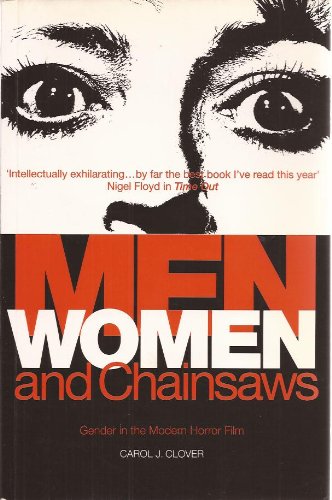

Why does Clover say that males relate to the females in horror films, in particular, the 'final girl'?
Within the book, Carol Clover states
that “Pulling gym shorts down and thumb-rubbing glasses are
things boys do to each other, not, by and large, things that girls do to each
other or that boys do to girls”. What
clover meant from this is that males share similar aspects to the final girl as
they can relate to being victimised just like the final girl experiences. Due
to being able to relate to the final girls experiences, this means that males
tend to not relate to the antagonist of the film as they are the ones who
conventionally humiliate the final girl whereas males tend to be on the
receiving end.
Why does Clover suggest that horror research is problematic?
Clover suggests
that Horror research is problematic due to the amount of analysis compared to
the audience of TV. This is mainly because most of horror films produced are
independent which means they are made less on the basis of audience statistics.
However, research that has been carried out shows that the most common horror
audience is young males (either in groups or their selves). As well as young
males we also get some middle aged – middle class males and females who like to
watch horror.
Who does Clover
suggest makes-up the typical horror audience?
As clover has
already stated, young males either within groups or by their selves make up the
bulk of the horror audience. However, Clover states that there are a few groups
who fill in the gaps of the audience such as adolescent girls/boys and middle
aged women. Another influence that attracts audience is the sub-genre of the
horror film which means the more mainstream the film is, the more normal the
audience tends to be.
Was there parity
between horror audiences in regards to those who watched horror films at the
cinema and those who watched them at home through rentals?
 As Clover
researched horror audiences, she saw a correlation between who watched horrors
at home through rentals and who watched them on the big screen. The same as
before, young males take up the bulk of the main audience within both of the
situations as well as middle aged men and nearly all of both sexes were under
the age of 25. Clover also states that the renter of said horror film is not
necessarily the only watcher or even the actual watcher.
As Clover
researched horror audiences, she saw a correlation between who watched horrors
at home through rentals and who watched them on the big screen. The same as
before, young males take up the bulk of the main audience within both of the
situations as well as middle aged men and nearly all of both sexes were under
the age of 25. Clover also states that the renter of said horror film is not
necessarily the only watcher or even the actual watcher.What are the two ways identified by Clover in which audiences identify with characters?
Within the book,
Carol clover states that there are two possible ways that the audience are able
to identify with the characters on screen. This can be done either with Primary
Identification (which is the use of camera techniques) or secondary
identification (with the character of empathic choice). Clover states that the
identification can be personally constructed from the viewer’s psyche (e.g. the
sadistic monster and masochistic victim). Carol proposes that primary
identification carries more weight out of the two as it is significant in the
way it connects characters. One theory that can back this is Mulvey’s ‘Male
Gaze’ Theory.

No comments:
Post a Comment